



Reactive Oxygen Species (ROS)
Reactive oxygen species (ROS), such as superoxide anion (O2-), hydrogen peroxide (H2O2), and hydroxyl radical (HO•), consist of radical and non-radical oxygen species formed by the partial reduction of oxygen. Cellular ROS are generated endogenously during mitochondrial oxidative metabolism as well as in cellular response to xenobiotics, cytokines, and bacterial invasion.
ROS also activates MAPK pathways by the direct inhibition of MAPK phosphatases. Through PTEN, the PI3K pathway is subject to reversible redox regulation by ROS generated by growth factor stimulation. The activation of autophagy may be a cellular defense mechanism in response to ROS.
All Product Categories
-
Reactive Oxygen Species (ROS) Inhibitors
(1041)
View all products
-
Reactive Oxygen Species (ROS) Agonists
(37)
View all products
-
Reactive Oxygen Species (ROS) Antagonists
(2)
View all products
-
Reactive Oxygen Species (ROS) Activators
(506)
View all products
-
Reactive Oxygen Species (ROS) Modulators
(22)
View all products
-
Reactive Oxygen Species (ROS) MDM2 Inhibitor
(1)
View all products
-
Reactive Oxygen Species (ROS) Inducers
(616)
View all products
-
Reactive Oxygen Species (ROS) Controls
(5)
View all products
-
Reactive Oxygen Species (ROS) Substrates
(3)
View all products
-
Reactive Oxygen Species (ROS) Related Products (2760)
Related Products (2760)

-
Antibodies (8)
-
Herbicidal agent 13
 0 ImagesCat. No.: HY-179280Herbicidal agent 13 (Compound II-13) is a herbicidal agent. Herbicidal agent 13 retains the dual-target binding capabilities for PDS and ZDS, with Kd values of 71.8 μM and 0.586 mM against SynPDS and AtZDS, respectively. Herbicidal agent 13 increases ROS. Herbicidal agent 13 exhibits postemergence herbicidal activity against dicotyledonous weeds and monocotyledonous weed POLFU.
-
Dapsone (Standard)
 0 ImagesSynonyms: 4,4′-Diaminodiphenyl sulfone (Standard); DDS (Standard)Dapsone (Standard) is the analytical standard of Dapsone. This product is intended for research and analytical applications. Dapsone (4,4′-Diaminodiphenyl sulfone) is an orally active and blood-brain penetrant sulfonamide antibiotic with bacteriostatic, antimycobacterial and antiprotozoal activities. Dapsone exerts effective antileprosy activity and inhibits folate synthesis in cell extracts of M. leprae. Dapsone is used for dermatologic disorder research, including leprosy, dermatitis herpetiformis, acne vulgaris et al.
-
N-trans-Caffeoyltyramine (Standard)
 0 ImagesCat. No.: HY-N8241RCAS No.: 103188-48-3N-trans-Caffeoyltyramine (Standard) is the analytical standard of N-trans-Caffeoyltyramine (HY-N8241). This product is intended for research and analytical applications. N-TRANS-CaffeoyLtyramine is an effective inflammatory response regulator, which has antioxidant activity and anticoagulation effects.
-
Sinapaldehyde (Standard)
 0 ImagesSinapaldehyde is a methoxyphenol and a selective COX-2 inhibitor (IC50: 47.8 µM) that can be extracted from various plants. Sinapaldehyde has antibacterial, anti-inflammatory, and antioxidant activities. Sinapaldehyde can scavenge DPPH free radicals (IC50: 172 μM). Sinapaldehyde is active against both Gram-negative and Gram-positive bacteria.
-
Lanceolarin
 0 ImagesCat. No.: HY-125670CAS No.: 15914-68-8Lanceolarin is an isoflavone compound isolated from the Andira inermis plant with anti-inflammatory, antioxidant and anti-tumor activities.
-
Norgestrel-d5
 0 ImagesCat. No.: HY-N7137SCAS No.: 2015995-56-7
-
2,2-Dihydroxyacetic acid (Standard)
 0 ImagesCat. No.: HY-W019724RCAS No.: 563-96-22,2-Dihydroxyacetic acid (Standard) is the analytical standard of 2,2-Dihydroxyacetic acid (HY-W019724). This product is intended for research and analytical applications. 2,2-Dihydroxyacetic acid is a key intermediate used in the synthesis of 3-aminocoumarone derivatives, which exhibit significant activity in chemiluminescence reactions and can be used for detecting hydrogen peroxide and evaluating urease activity .
-
(S)-Alyssin
 0 ImagesCat. No.: HY-116920BCAS No.: 167963-04-4(S)-Alyssin is a enantiomer of Alyssin (HY-116920). Alyssin, found in Cruciferous Vegetables, exerts anticancer activity in HepG2 by increasing intracellular reactive oxygen species and tubulin depolymerization.
-
Kuwanon G (Standard)
 0 ImagesCat. No.: HY-N4247RCAS No.: 75629-19-5Kuwanon G (Standard) is the analytical standard of Kuwanon G (HY-N4247). This product is intended for research and analytical applications. Kuwanon G is a flavonoid compound and an antagonist of the bombesin receptor. Kuwanon G has multiple activities such as bactericidal, anti-tumor, anti-inflammatory, antioxidant, anti-atherosclerotic, and neuroprotective effects. Kuwanon G exhibits strong antibacterial activity against oral pathogens, especially cariogenic bacteria and periodontal pathogens. Kuwanon G can induce apoptosis and inhibit proliferation, migration, and invasion of tumor cells. Kuwanon G can be used in the research of diseases such as gastric cancer and atherosclerosis.
-
Berkeleyacetal C
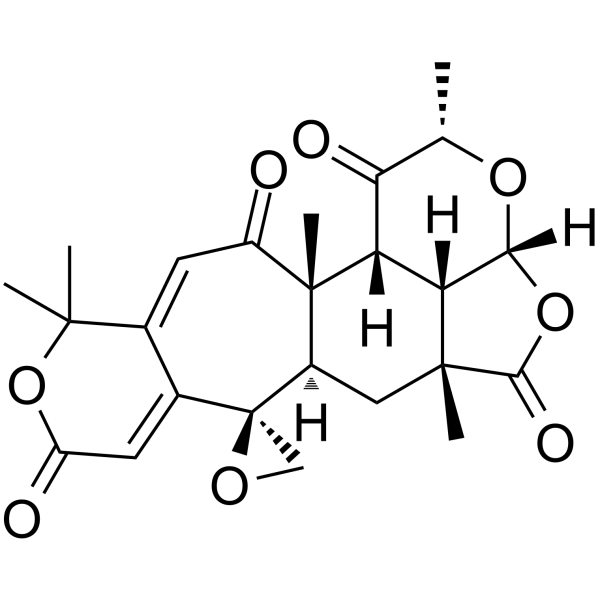 0 ImagesCat. No.: HY-N10175CAS No.: 959772-67-9keleyacetal C, a meroterpenoid compound with anti-inflammatory effects via inhibiting NF-κB, ERK1/2 and IRF3 signaling pathways. Berkeleyacetal C significantly inhibits the expression of iNOS and the following NO production by macrophages. Berkeleyacetal C inhibits expression and secretion of key pro-inflammatory factors and chemokines (TNF-α, IL-6, IL-1β, MIP-1α, and MCP-1). Berkeleyacetal C also inhibits activation of neutrophils and reactive oxygen species (ROS) production. Berkeleyacetal C can be used for the study of inflammatory disorders.
-
7,4'-Dimethoxy-3-hydroxyflavone
 0 ImagesCat. No.: HY-174829CAS No.: 13198-99-77,4'-Dimethoxy-3-hydroxyflavone is an orally active PAR4 antagonist. 7,4'-Dimethoxy-3-hydroxyflavone inhibits PAR4-mediated human platelet aggregation with an IC50 of 1.4 μM. 7,4'-Dimethoxy-3-hydroxyflavone inhibits PAR4-mediated human platelet aggregation and PAR4 signaling pathways, including NF-κB, Ca2+/protein kinase C, Akt, ERK and p38. 7,4'-Dimethoxy-3-hydroxyflavone prevents vascular PAR4 expression, endothelial dysfunction and ameliorates oxidative stress in Streptozotocin (STZ) (HY-13753)-induced diabetic mice. 7,4'-Dimethoxy-3-hydroxyflavone prevents thrombosis in mice without affecting bleeding time[1][2].
-
KH176m
 0 ImagesCat. No.: HY-128795CAS No.: 2095304-61-1KH176m is the major active metabolite of KH176 (HY-121577). KH176m is a microsomal prostaglandin E synthase-1 (mPGES-1) inhibitor that can cross the blood-brain barrier, with an IC50 of 0.16 µM against mouse mPGES-1 and 1.51 µM against human mPGES-1. KH176m blocks LPS- or IL-1β-induced PGE2 production, scavenges ROS, inhibits lipid peroxidation, accelerates NADPH consumption, suppresses the growth of prostate cancer spheroids, reduces the CD44+ CD24− prostate cancer stem cell population, and protects fibroblasts with oxidative phosphorylation defects from redox stress-induced death. KH176m can be used in research related to mitochondrial diseases, inflammatory pain, inflammatory neurological diseases, inflammatory cancers, and prostate cancer.
-
CP-312 (Standard)
 0 ImagesCat. No.: HY-124815RCAS No.: 895470-67-4CP-312 (Standard) is the analytical standard of CP-312. This product is intended for research and analytical applications. CP-312 is a potent Heme Oxygenase-1 (HO-1) inducer. CP-312 protects hiPSC-CM viability by targeting the antioxidant response network through induction of HMOX1 expression. CP-312 protects human iPSC-derived cardiomyocytes from oxidative stress.
-
Cistanoside H
 0 ImagesCat. No.: HY-N12696CAS No.: 104806-92-0Cistanoside H is a phenylethanoid glycoside neuroprotective agent that can be isolated from the leaves and twigs of Callicarpa dichotoma. Cistanoside H can alleviate glutamate-induced oxidative stress and protect rat cortical cells from neurotoxic damage. Cistanoside H protects nerve cells against excitotoxic damage and can be applied in research related to neurodegenerative diseases (such as Alzheimer's disease and Parkinson's disease).
-
TPEN (Standard)
 0 ImagesSynonyms: TPEDA (Standard)TPEN (Standard) is the analytical standard of TPEN (HY-100202). This product is intended for research and analytical applications. TPEN (TPEDA) is a specific cell-permeable heavy metal chelator. TPEN has a higher affinity for Zn2+, but a lower affinity for Mg2+ and Ca2+. TPEN induces DNA damage and increases intracellular ROS production. TPEN also inhibits cell proliferation and induces apoptosis.
-
Taurolithocholic Acid-d5 sodium
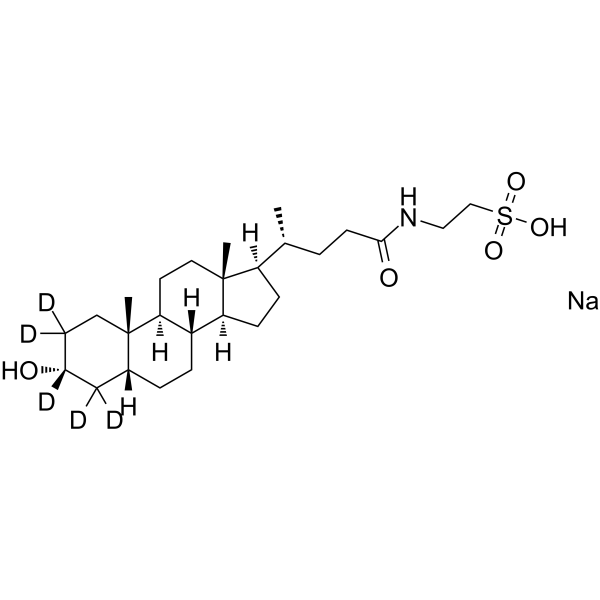 0 ImagesCat. No.: HY-113308AS1CAS No.: 1265476-97-8Taurolithocholic Acid-d5 (sodium) is the deuterium labeled Taurolithocholic acid sodium salt. Taurolithocholic Acid sodium salt is an orally active bile acid and antiviral agent. Taurolithocholic Acid sodium salt upregulates FADS2 by activating the TGR5-PI3K/AKT-SREBP2 signaling axis, inhibits SFTSV-induced ferroptosis, viral replication and viral entry of HBV/HDV, while reducing the release of IL-1β, lipid ROS and LDH. While exerting antiviral protective effects, Taurolithocholic Acid sodium salt also stimulates the recycling of hepatocellular membrane transporters, impairs canalicular bile acid secretion function, and induces hepatocyte cholestasis, apoptosis and acute hepatocellular injury. Taurolithocholic Acid sodium salt serves as an experimental model compound for hepatocellular cholestasis. At concentrations ≤200 μM, Taurolithocholic Acid sodium salt shows no cytotoxicity and does not activate the interferon pathway. Taurolithocholic Acid sodium salt not only protects mice from lethal SFTSV infection but also is suitable for studies related to severe fever with thrombocytopenia syndrome and cholestasis.
-
Hippuric acid-13C6
 0 ImagesCat. No.: HY-W747703CAS No.: 1163160-18-6Synonyms: Benzoylglycine-13C6Hippuric acid-13C6 (Benzoylglycine-13C6) is 13C labeled Hippuric acid. Hippuric Acid is an orally active metabolite. Hippuric Acid can be produced by intestinal microorganisms from the metabolism of polyphenols, benzoic acid. Hippuric Acid decreases NRF2, MMP9 and leads to ROS accumulation. Hippuric Acid activates TGFβ/SMAD signaling. Hippuric Acid improves hyperuricemia and colitis. Hippuric Acid can also be used in cardiovascular disease research. .
-
4-Oxofenretinide-d4
 0 ImagesCat. No.: HY-109583SCAS No.: 2991099-34-2Synonyms: 4-Oxo-4-HPR-d44-Oxofenretinide-d4 (4-Oxo-4-HPR-d4) is deuterium labeled 4-Oxofenretinide. 4-Oxofenretinide (4-Oxo-4-HPR) is a metabolite of Fenretinide (HY-15373). 4-Oxofenretinide induces cell growth inhibition in ovarian, breast, and neuroblastoma tumor cell lines. 4-Oxofenretinide causes a marked accumulation of cells in G2-M. 4-Oxofenretinide induces cancer cell apoptosis through caspase-9.

-
2'-Hydroxy-3,4-dimethoxychalcone
 0 Images2'-Hydroxy-3,4-dimethoxychalcone is a chalcone derivative and lipoxygenase inhibitor with an IC50 of 67.5 μM. 2'-Hydroxy-3,4-dimethoxychalcone acts as a radical scavenger that scavenges DPPH stable free radical, superoxide anion radical, and hydroxyl radical. 2'-Hydroxy-3,4-dimethoxychalcone scavenges hydrogen peroxide and inhibits linoleic acid lipid peroxidation. 2'-Hydroxy-3,4-dimethoxychalcone can be used for research on oxidative damage and inflammatory diseases.




